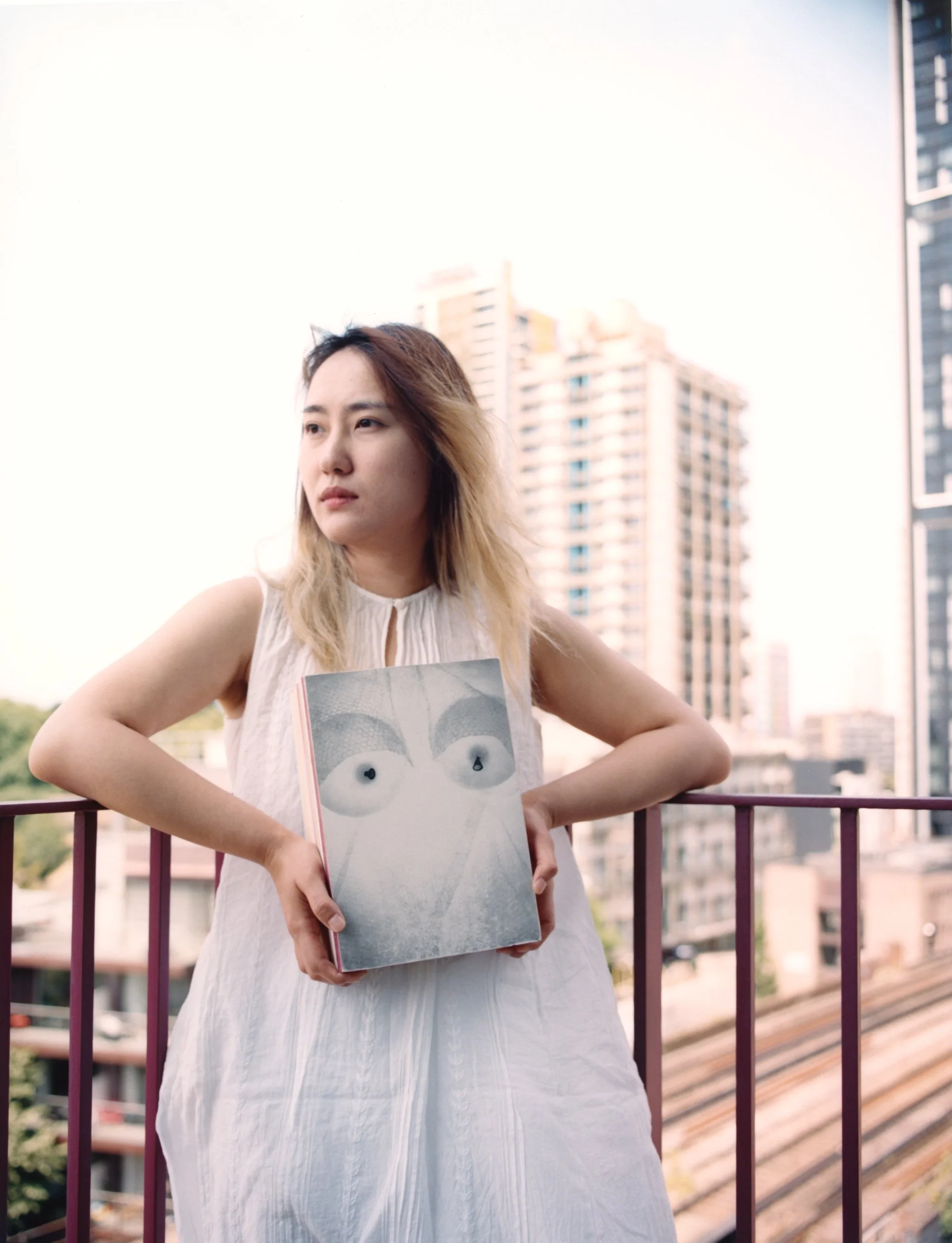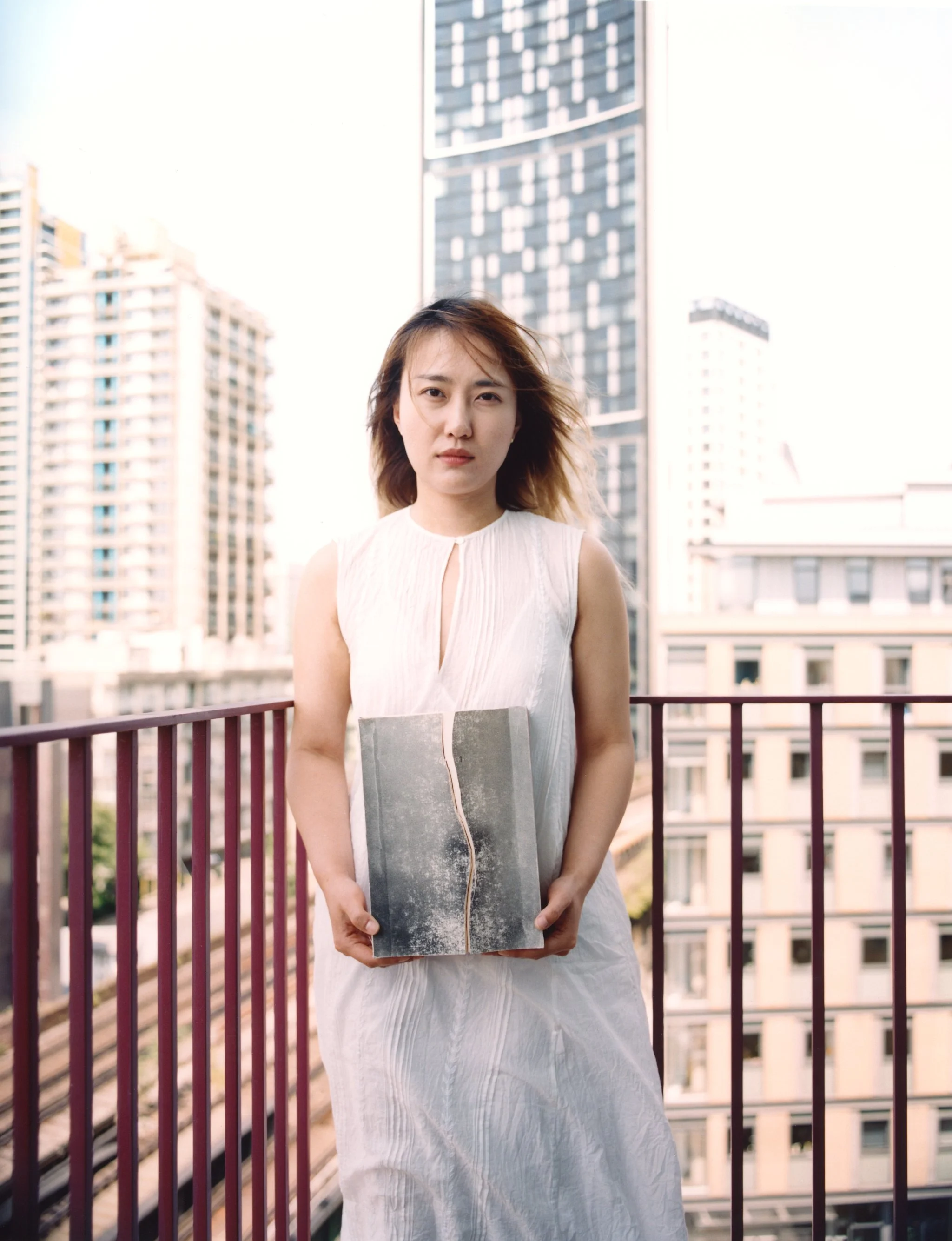
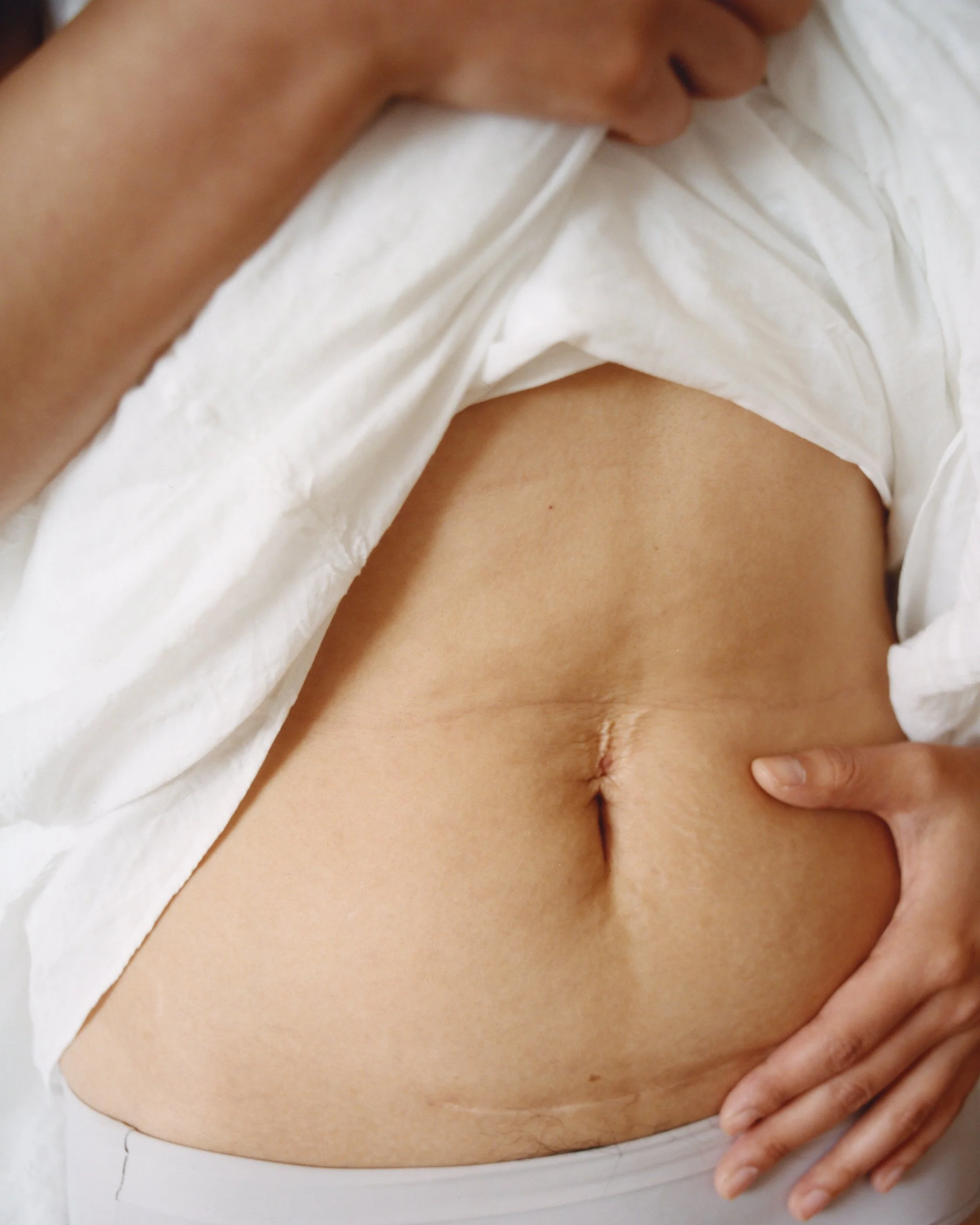
Bing Geng is a photographer. Her project 24:01, inspired by her own postpartum experience, explores the often-silenced realities of postpartum depression among Chinese women. In this photo, taken on the balcony of her flat, she holds her photobook. Its cover revealing an image of her own abdomen marked by diastasis recti, a lasting trace of childbirth and embodied memory.
The project is called ‘24:01’ because we only have 24 hours in a day, but for mothers, there's almost no time for themselves in those 24 hours. I hope mothers can spare even a minute, a second, to look in the mirror, to really look at themselves, and to say to themselves, "You are good, you are beautiful, you work hard, you've worked very hard." Even if it's just for a short minute, it's good to be yourself again. This 1 minute doesn't actually exist; it's a fictional concept of time, just an imaginary gap. I hope mothers can see themselves again in this non-existent minute.
While working on this project, I researched a lot. International medical reports show that one in seven mothers suffers from postpartum depression. In China, statistics from major cities indicate a 24% incidence rate of postpartum depression. This rate is already high, not to mention that women in rural areas are not included in these statistics. Their situation is even more difficult, yet they often go unnoticed.
Data from other countries is also worth comparing: Japan's postpartum depression rate is 14%, the UK's is 8.6%, and the average for developing countries is 19.8%. Although China's rate may not seem the highest, given our massive population of 1.4 billion, the number of women suffering from this condition is extremely large.